This year’s SwissHoldings General Assembly focused on the question of how Switzerland and its multinational companies can remain successful in a world increasingly marked by geopolitical tensions. Under the title “The Rise of Power Politics – Opportunities for Switzerland in the New World Order,” high-ranking representatives from politics, administration, business, and academia discussed the changing global landscape and its implications for Switzerland as a business location. The conclusion of the discussions is clear: Switzerland needs a clear economic policy vision. Such a vision will only be effective if it is implemented with determination.
Geopolitical tensions, rising protectionism, and the ongoing decline of multilateralism are fundamentally altering the global landscape. Faith in a stable, rules-based international order has given way to a phase of increasing power politics. This presents new challenges for Switzerland as an open economy. However, we should view these as opportunities: “To remain successful in the long term, Switzerland must focus on its strengths, develop a clear economic policy vision, and implement it consistently,” urges SwissHoldings President Andreas Bohrer.
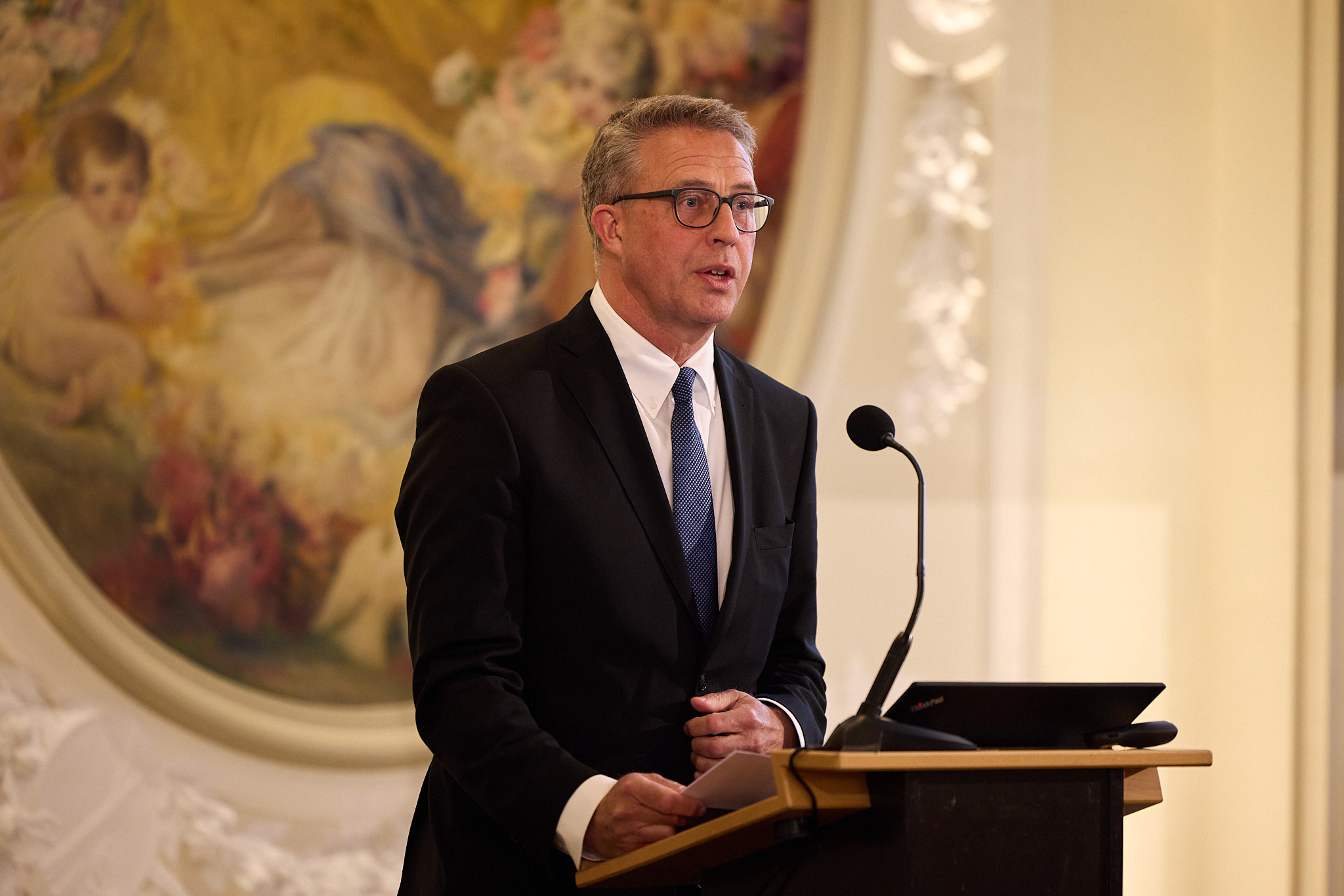
Opening speech: Andreas Bohrer – President of SwissHoldings and Member of the Executive Committee of the Lonza Group
Following the President’s opening remarks, Federal Councillor Ignazio Cassis analyzed current geopolitical developments from the federal government’s perspective and outlined how Switzerland can position itself in an environment increasingly shaped by power politics. Political scientist Christoph Frei provided an analytical assessment of global changes. He focused in particular on the structural shifts in the international order and their significance for open economies such as Switzerland.
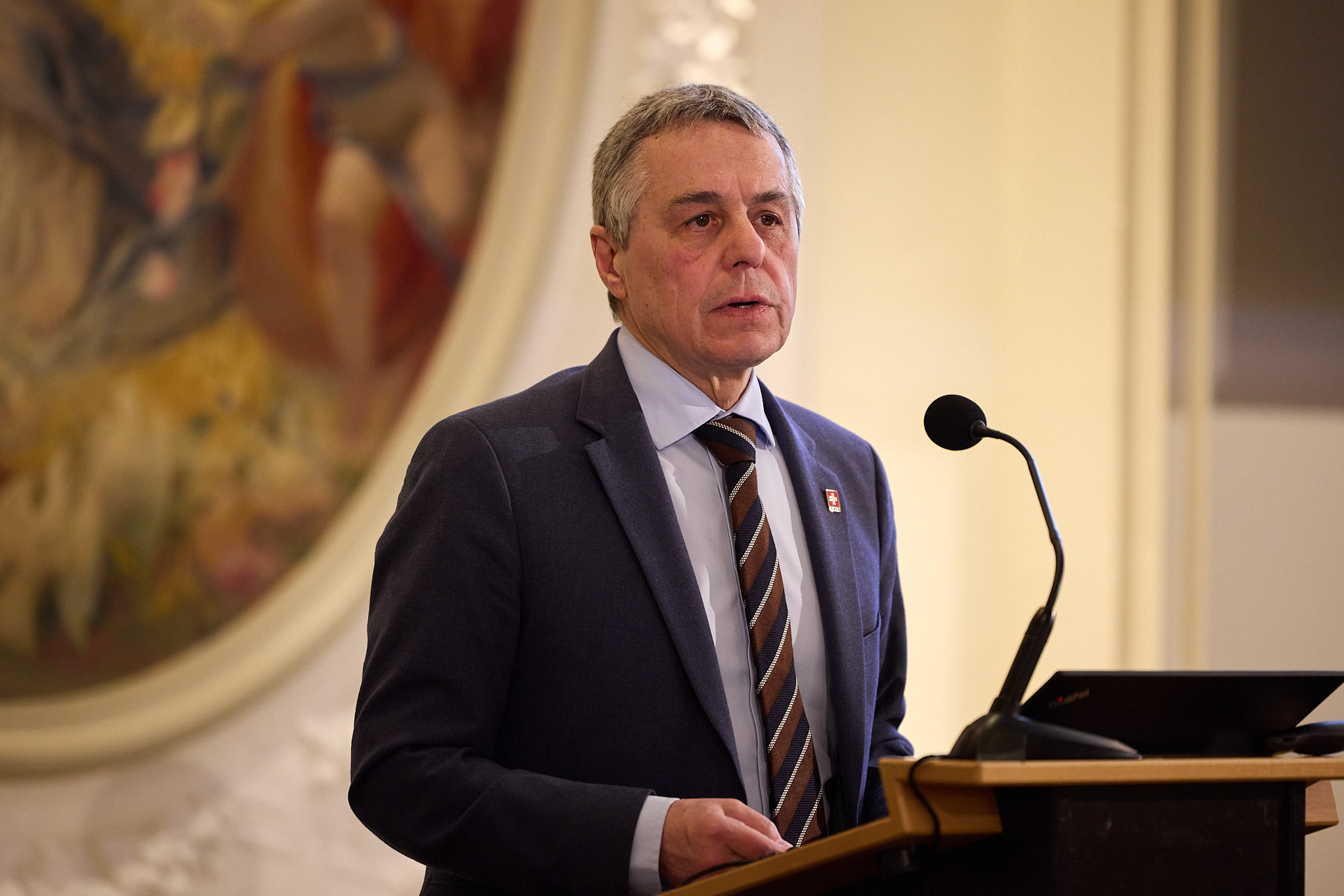
Keynote speech: Federal Councillor Ignazio Cassis
Switzerland as a Business Location Under Pressure in Global Competition
In the subsequent panel discussion, moderated by Urs Gredig, Daniela Stoffel (State Secretary for International Financial Affairs), National Councillor Gerhard Pfister, and Severin Schwan (Chairman of the Board of Directors of F. Hoffmann-La Roche AG) discussed the impact of geopolitical developments on Switzerland as a business location and on Swiss companies. The discussion focused on issues of competitiveness and the economic policy framework. It became clear that geopolitical developments are increasingly shaping economic issues and that Switzerland is called upon to leverage its strengths in a targeted manner.
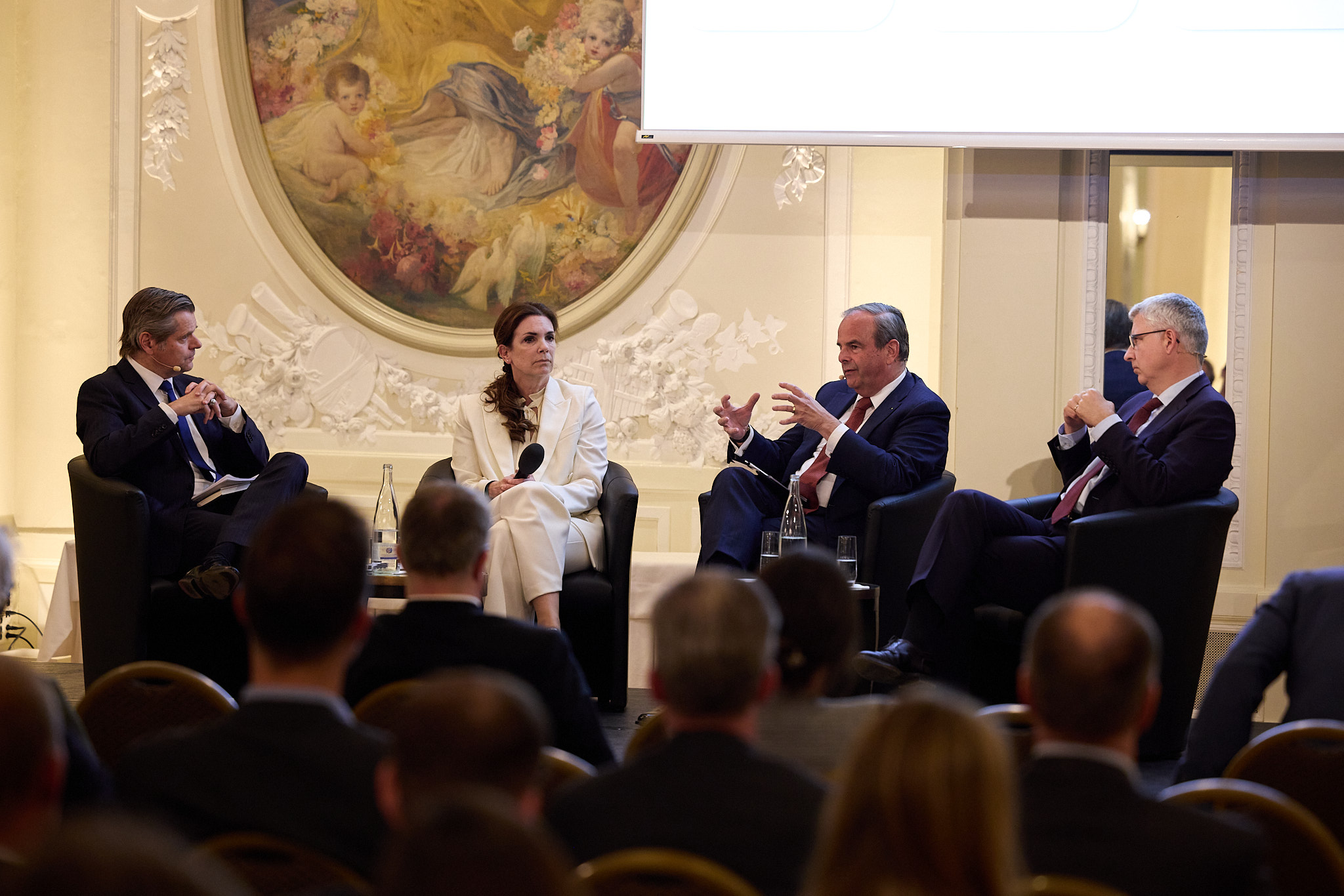
On the panel from left to right: Urs Gredig, Daniela Stoffel, National Councillor Gerhard Pfister, Severin Schwan
Switzerland’s economic success cannot be taken for granted. The country must act decisively in order to succeed in the global competition among business locations. Standing still is not an option in this environment. It is important for Switzerland to build on its traditional strengths and those of its economy. To do so a clear economic policy vision and its consistent implementation are required. Switzerland must vigorously position itself as a leading location for multinational, innovative companies with high value-added. Headquarters functions, research and development, and high-quality manufacturing activities are of central importance in this regard. For Switzerland, this results in attractive and well-paid jobs as well as substantial tax revenues—a foundation for the country’s long-term prosperity.
The Importance of Dialogue for the Future of the Business Location
To conclude the event, SwissHoldings CEO Gabriel Rumo emphasized the importance of constructive dialogue between business, politics, and administration: “Especially in an environment increasingly shaped by power politics, coordinated and solution-oriented approaches are needed to effectively address new challenges. It is crucial that we work together to further develop Switzerland’s competitiveness with a clear focus.”
The General Assembly has shown that, in a changing global environment, Switzerland must make targeted use of its proven strengths and capitalize on new opportunities. This involves, in particular, proactively developing the economic policy framework, avoiding additional burdens on businesses, and securing international competitiveness in the long term.
For further information:
Julia Besnier | Head Communications & Public Affairs
julia.besnier@swissholdings.ch | +41 31 356 68 60